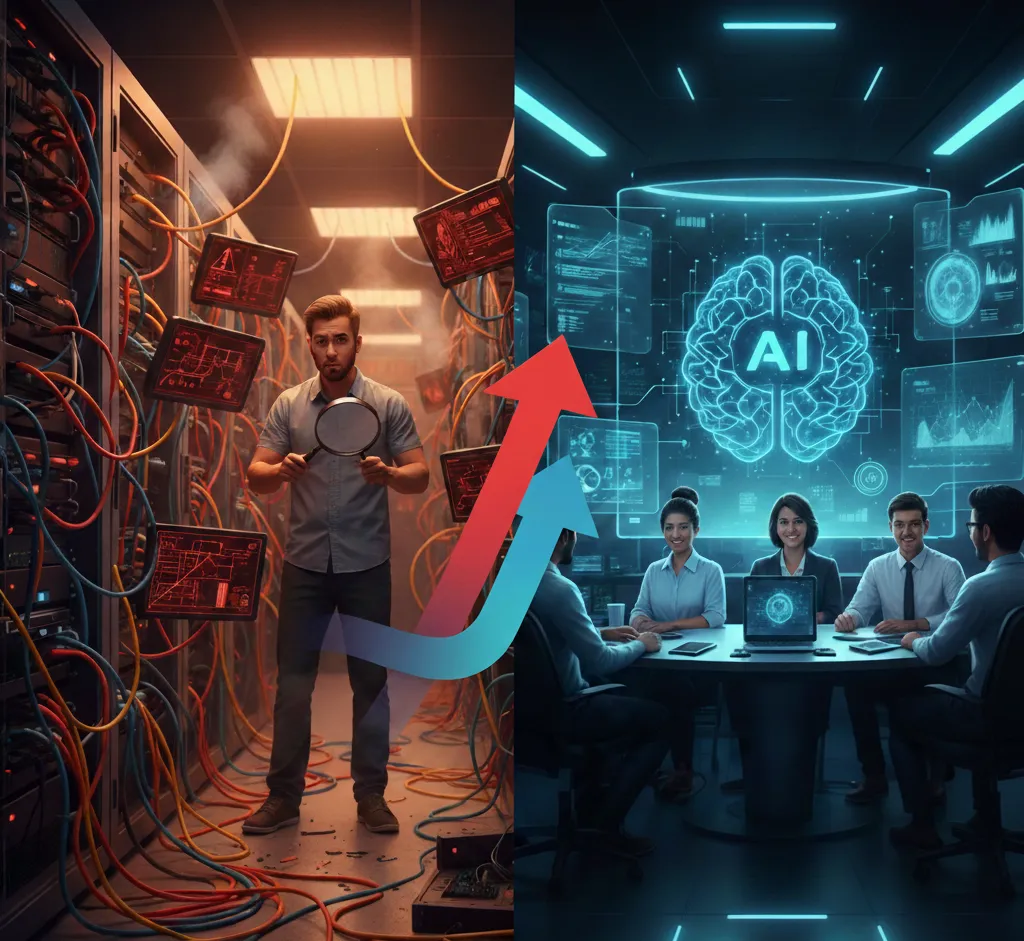
Your MSP Is Falling Behind If It Isn’t Using AI. Here’s What to Expect Instead.
If your Managed Service Provider still works the way it did five years ago, it’s worth taking a step back and asking whether that’s still good enough.
IT has changed quietly, but significantly. Expectations are different now, especially around response time, security, and how problems are handled. AI plays a big role in that shift. It is no longer something futuristic. It is already shaping how strong IT environments are run on a daily basis.
Here are a few areas where that difference is starting to show.
1. Issues shouldn’t be discovered after something breaks
In a traditional setup, most problems are noticed after the fact. A system slows down, something crashes, or a user reports an issue. Then the investigation begins.
What is changing now is that many of these problems can be picked up earlier, sometimes hours or days before they turn into something visible. AI tools continuously scan patterns across systems, including logins, traffic flow, and general behavior. They are good at spotting things that do not quite add up.
For example, repeated login attempts at an unusual time or a slow increase in outbound data might not stand out to someone checking a dashboard quickly. These small signals are often early signs of something bigger.
The difference in experience is simple. Instead of hearing that something failed, you hear that something was handled before it could turn into a problem.
2. Basic IT requests shouldn’t slow people down anymore
Waiting on simple IT requests is still one of the most common frustrations inside a business. Password resets, access issues, and VPN problems are small on their own, but they add up quickly when people are stuck waiting.
This is where AI has made a noticeable impact. Many routine issues do not need to sit in a queue anymore. They can be handled almost instantly through automated systems that understand the request and take action without needing escalation.
This does not remove the need for technicians. It changes how their time is used. Instead of spending most of the day on repetitive tasks, they can focus on issues that actually require deeper attention.
For the end user, it simply feels faster. Less waiting and fewer interruptions during the day.
3. Security tools are no longer just looking for known threats
Cybersecurity is less predictable than it used to be. Attacks do not always follow patterns that can be easily recognized, and relying only on known threat signatures creates gaps.
Many modern security tools now focus on behavior. Instead of asking whether something matches a known threat, they look at what is actually happening. This includes how a file behaves, how a user account is being used, and how systems interact with each other.
This shift allows newer or modified threats to be detected even if they have not been seen before.
It also means security is no longer isolated to one layer. Signals are often connected across endpoints, email systems, and user activity. This makes it easier to pick up patterns that would otherwise go unnoticed.
4. IT recommendations should come from data, not assumptions
Another change is how IT decisions are made. In the past, recommendations often came from periodic reviews or general best practices.
There is now much more data available. Usage patterns, system performance, and capacity trends can all be monitored continuously. This means decisions do not have to wait for a quarterly review or rely on estimates.
Instead, you get a clearer picture of what is actually happening. A system might be underused. Another might be close to its limits. These things can be identified early and addressed before they start affecting daily work.
It leads to a more practical way of planning, since it is based on real usage rather than assumptions.
5. Recovery matters just as much as prevention
Even with the right systems in place, things can still go wrong. Hardware fails, mistakes happen, and sometimes issues slip through.
What matters at that point is how quickly things can be recovered.
This is another area where expectations have shifted. Backup systems are getting better at verifying themselves, which reduces the risk of discovering problems when you actually need the data. Recovery processes are also becoming more automated, which helps reduce delays and uncertainty during an incident.
The result is usually shorter downtime and a more controlled response when something goes wrong.
Disruptions still happen, but the recovery process is faster and more reliable.
The Bottom Line
AI in IT support is not about adding one more tool or chasing a trend. It reflects a larger change in how strong MSPs operate.
The best providers are moving away from a reactive model and toward a more proactive, data-driven, and security-focused approach. They are using AI and automation to identify risks earlier, resolve routine issues faster, improve visibility, and make better recommendations.
Some MSPs have already adapted. Others are still working the same way they did years ago.
Over time, that difference becomes easier to notice. It shows up in how quickly issues are resolved, how often problems are prevented, how clearly risks are explained, and how confidently the business can plan ahead.
If you are not sure whether your current MSP is helping you stay ahead or simply reacting after problems happen, it may be time for a second perspective.
At Setton Consulting, our goal is to make IT easier to understand, easier to manage, and easier to trust. If there are gaps, we will point them out clearly. If things are working well, we will tell you that too.
Schedule a conversation at settonconsulting.com and walk away with a clearer understanding of where your IT environment stands.