Resources
Client Portal
Tech Insights
Stay ahead in the dynamic world of technology with our tailored solutions and proactive support.
The Hidden Costs of IT Downtime: Why Proactive IT Maintenance Matters
Technology powers nearly every modern business operation. Orders move through digital systems, teams collaborate through cloud platforms, and customer relationships depend on reliable communication tools.
So when technology stops working, business stops working.
Many organizations view downtime as a temporary inconvenience. A server fails, the network slows down, or email stops working for a while. Eventually, systems come back online, and everyone moves on.
But the true cost of downtime often goes unnoticed.
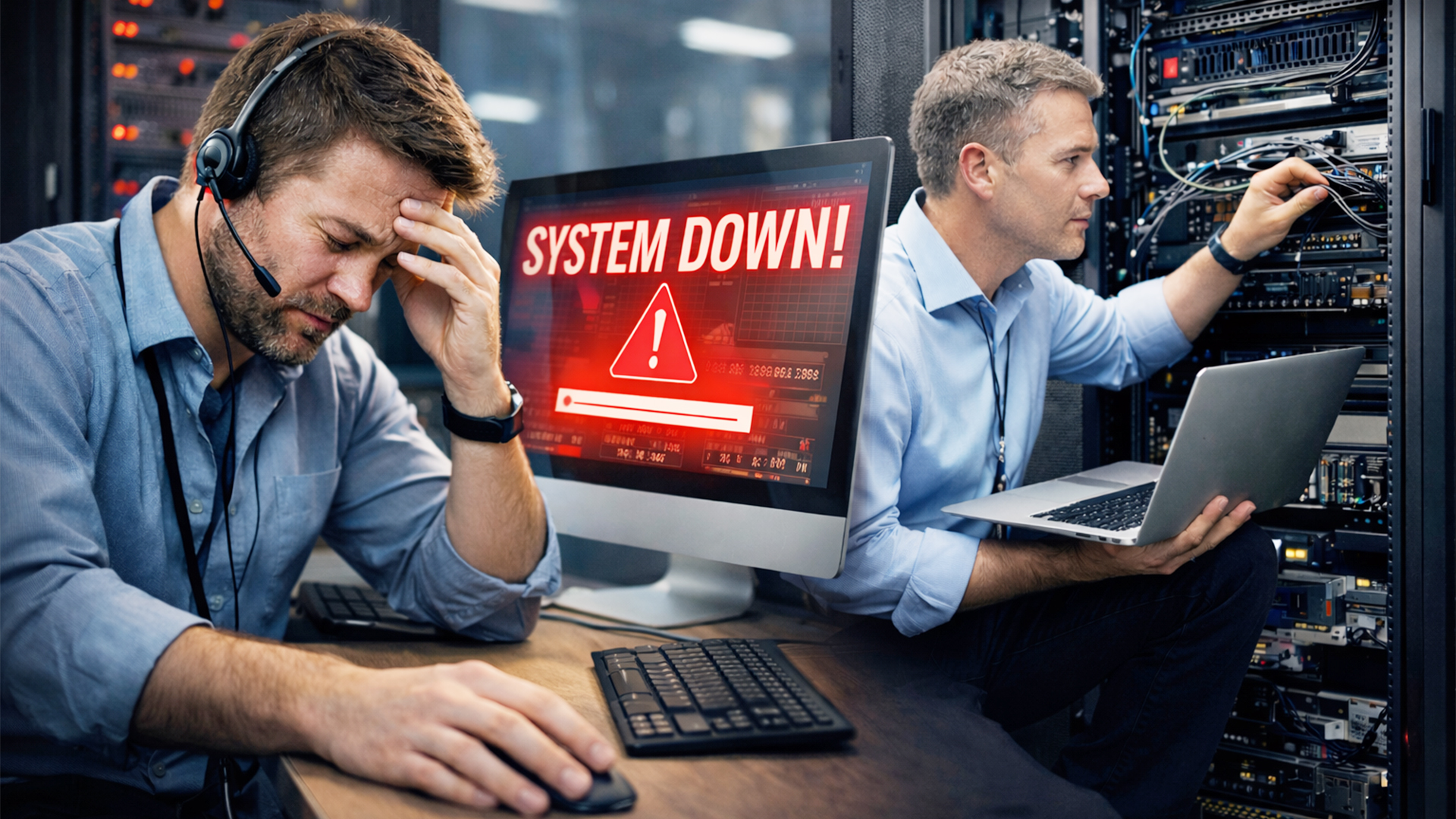
Downtime does not just interrupt work. It quietly reduces productivity, disrupts operations, impacts customer trust, and increases security risks. In today’s digital business environment, preventing these disruptions has become a critical part of maintaining business stability.
Downtime Is No Longer Just an IT Problem
In the past, technology issues were often isolated. A single workstation might stop working or a printer might fail. While inconvenient, these problems rarely affected the entire organization.
Today, businesses rely on many interconnected systems, such as:
Cloud collaboration platforms
Customer relationship management systems
Accounting and financial software
Email and communication platforms
Remote access infrastructure
Cybersecurity tools
When even one of these systems fails, it can create a ripple effect across the business.
A slow network can delay customer orders.
A failed update can interrupt financial processes.
A compromised device can affect the entire network.
What appears to be a technical issue quickly becomes a business problem.
Lost Productivity Across the Organization
One of the most immediate consequences of downtime is lost productivity.
When employees cannot access systems, files, or communication tools, everyday work quickly comes to a halt.
For example, if a company with 25 employees experiences a two-hour network outage, employees may lose access to shared files, CRM systems, and internal applications.
During that time:
Work stops across departments
Customer requests are delayed
Internal communication slows down
Even when systems return, productivity does not immediately recover. Employees must restart tasks and catch up on the work that was delayed during the outage.
These lost hours may not always appear on financial reports, but over time, they significantly impact overall efficiency.
Operational and Financial Disruption
Downtime rarely impacts just one department. It often affects multiple parts of the organization at the same time.
Sales teams may lose access to customer information.
Operations teams may delay services or deliveries.
Finance teams may struggle with interrupted transactions.
Leadership teams also shift their attention away from strategic priorities to resolve urgent technical problems.
Over time, repeated disruptions create real financial consequences, including:
Emergency IT repairs
Data recovery efforts
Lost billable hours
Delayed sales opportunities
Employee overtime during system recovery
Emergency fixes are often far more expensive than planned maintenance and proactive monitoring.
The Reputation Risk Businesses Often Overlook
Customers rarely see the technical problems behind downtime. What they experience instead is delay or lack of response.
An online portal stops working.
Emails bounce back.
Support requests go unanswered.
To customers, these issues can signal instability.
Trust is built on reliability. If systems fail frequently, customers may begin to question whether a company can consistently deliver its services.
For many businesses, operational reliability directly affects reputation and long-term customer relationships.
The Security Risks Behind Unstable Systems
Another hidden cost of downtime is the security risk that often comes with poorly maintained systems.
Many outages are caused by issues such as:
Unpatched software vulnerabilities
Aging hardware failures
Misconfigured systems
Incomplete updates
Overloaded infrastructure
These weaknesses are also common entry points for cyberattacks.
Without proper maintenance and monitoring, systems become more vulnerable to threats such as ransomware, credential theft, or unauthorized network access.
In many cases, downtime and cybersecurity incidents are closely connected.
Why Reactive IT Is No Longer Enough
Some organizations still follow a break-fix approach to IT, where problems are addressed only after something stops working.
While this approach may have worked in the past, modern IT environments are far more complex.
Cloud platforms require constant monitoring.
Cybersecurity threats evolve rapidly.
Software updates must be carefully managed.
Networks must support hybrid and remote work environments.
Without proactive oversight, small issues can quickly grow into major disruptions.
What Proactive IT Maintenance Looks Like
Proactive IT management focuses on preventing problems before they impact the business.
Instead of reacting to outages, systems are continuously monitored and maintained to ensure stability and security.
A proactive strategy often includes:
Continuous Monitoring
Systems are monitored to identify unusual activity, performance issues, or early signs of failure.
Patch and Update Management
Regular updates help close security gaps and keep systems running efficiently.
Backup and Disaster Recovery Planning
Reliable backups allow organizations to restore critical data quickly if hardware failures or cyber incidents occur.
Cybersecurity Protection
Advanced security tools help protect networks, devices, and communication systems from modern threats.
This proactive approach helps reduce downtime and maintain a stable technology environment.
Building a More Reliable Technology Environment
IT downtime rarely arrives with warning, and its impact often extends beyond the initial disruption.
Lost productivity, operational delays, customer frustration, and security risks can accumulate over time.
Organizations that invest in proactive IT strategies often benefit from:
Greater system reliability
Stronger cybersecurity protection
Lower long-term technology costs
Improved operational continuity
At Setton Consulting, businesses receive proactive IT management, cybersecurity protection, and strategic technology guidance designed to keep systems secure and running smoothly. By monitoring environments, managing updates, and addressing risks early, businesses can focus on growth instead of technology disruptions. If your organization is looking to strengthen its IT infrastructure, reach out to us to learn how our team can support your business with reliable, tailored solutions.

Michael Setton
In 2010, he started Setton Consulting because he possess a unique skill set and an immense desire to help businesses grow and prosper with best-in-class technology solutions, implemented correctly the first time. As a native New Yorker, he have a passion for driving local businesses that serve their community toward success, applying incredibly high standards with every client he work with.
How can we help?
Call us at (855) 699-7219 or fill in the form below and we'll help in any way we can.
Featured Posts
The Hidden Costs of IT Downtime: Why Proactive IT Maintenance Matters
Technology powers nearly every modern business operation. Orders move through digital systems, teams collaborate through cloud platforms, and customer relationships depend on reliable communication tools.
So when technology stops working, business stops working.
Many organizations view downtime as a temporary inconvenience. A server fails, the network slows down, or email stops working for a while. Eventually, systems come back online, and everyone moves on.
But the true cost of downtime often goes unnoticed.
Downtime does not just interrupt work. It quietly reduces productivity, disrupts operations, impacts customer trust, and increases security risks. In today’s digital business environment, preventing these disruptions has become a critical part of maintaining business stability.
Downtime Is No Longer Just an IT Problem
In the past, technology issues were often isolated. A single workstation might stop working or a printer might fail. While inconvenient, these problems rarely affected the entire organization.
Today, businesses rely on many interconnected systems, such as:
Cloud collaboration platforms
Customer relationship management systems
Accounting and financial software
Email and communication platforms
Remote access infrastructure
Cybersecurity tools
When even one of these systems fails, it can create a ripple effect across the business.
A slow network can delay customer orders.
A failed update can interrupt financial processes.
A compromised device can affect the entire network.
What appears to be a technical issue quickly becomes a business problem.
Lost Productivity Across the Organization
One of the most immediate consequences of downtime is lost productivity.
When employees cannot access systems, files, or communication tools, everyday work quickly comes to a halt.
For example, if a company with 25 employees experiences a two-hour network outage, employees may lose access to shared files, CRM systems, and internal applications.
During that time:
Work stops across departments
Customer requests are delayed
Internal communication slows down
Even when systems return, productivity does not immediately recover. Employees must restart tasks and catch up on the work that was delayed during the outage.
These lost hours may not always appear on financial reports, but over time, they significantly impact overall efficiency.
Operational and Financial Disruption
Downtime rarely impacts just one department. It often affects multiple parts of the organization at the same time.
Sales teams may lose access to customer information.
Operations teams may delay services or deliveries.
Finance teams may struggle with interrupted transactions.
Leadership teams also shift their attention away from strategic priorities to resolve urgent technical problems.
Over time, repeated disruptions create real financial consequences, including:
Emergency IT repairs
Data recovery efforts
Lost billable hours
Delayed sales opportunities
Employee overtime during system recovery
Emergency fixes are often far more expensive than planned maintenance and proactive monitoring.
The Reputation Risk Businesses Often Overlook
Customers rarely see the technical problems behind downtime. What they experience instead is delay or lack of response.
An online portal stops working.
Emails bounce back.
Support requests go unanswered.
To customers, these issues can signal instability.
Trust is built on reliability. If systems fail frequently, customers may begin to question whether a company can consistently deliver its services.
For many businesses, operational reliability directly affects reputation and long-term customer relationships.
The Security Risks Behind Unstable Systems
Another hidden cost of downtime is the security risk that often comes with poorly maintained systems.
Many outages are caused by issues such as:
Unpatched software vulnerabilities
Aging hardware failures
Misconfigured systems
Incomplete updates
Overloaded infrastructure
These weaknesses are also common entry points for cyberattacks.
Without proper maintenance and monitoring, systems become more vulnerable to threats such as ransomware, credential theft, or unauthorized network access.
In many cases, downtime and cybersecurity incidents are closely connected.
Why Reactive IT Is No Longer Enough
Some organizations still follow a break-fix approach to IT, where problems are addressed only after something stops working.
While this approach may have worked in the past, modern IT environments are far more complex.
Cloud platforms require constant monitoring.
Cybersecurity threats evolve rapidly.
Software updates must be carefully managed.
Networks must support hybrid and remote work environments.
Without proactive oversight, small issues can quickly grow into major disruptions.
What Proactive IT Maintenance Looks Like
Proactive IT management focuses on preventing problems before they impact the business.
Instead of reacting to outages, systems are continuously monitored and maintained to ensure stability and security.
A proactive strategy often includes:
Continuous Monitoring
Systems are monitored to identify unusual activity, performance issues, or early signs of failure.
Patch and Update Management
Regular updates help close security gaps and keep systems running efficiently.
Backup and Disaster Recovery Planning
Reliable backups allow organizations to restore critical data quickly if hardware failures or cyber incidents occur.
Cybersecurity Protection
Advanced security tools help protect networks, devices, and communication systems from modern threats.
This proactive approach helps reduce downtime and maintain a stable technology environment.
Building a More Reliable Technology Environment
IT downtime rarely arrives with warning, and its impact often extends beyond the initial disruption.
Lost productivity, operational delays, customer frustration, and security risks can accumulate over time.
Organizations that invest in proactive IT strategies often benefit from:
Greater system reliability
Stronger cybersecurity protection
Lower long-term technology costs
Improved operational continuity
At Setton Consulting, businesses receive proactive IT management, cybersecurity protection, and strategic technology guidance designed to keep systems secure and running smoothly. By monitoring environments, managing updates, and addressing risks early, businesses can focus on growth instead of technology disruptions. If your organization is looking to strengthen its IT infrastructure, reach out to us to learn how our team can support your business with reliable, tailored solutions.
Michael Setton
In 2010, he started Setton Consulting because he possess a unique skill set and an immense desire to help businesses grow and prosper with best-in-class technology solutions, implemented correctly the first time. As a native New Yorker, he have a passion for driving local businesses that serve their community toward success, applying incredibly high standards with every client he work with.
Get More From
Your IT Partner
Call our business outsourced IT support department directly at (855) 699-7219 or simply fill out this form and we will get in touch with you to set up a getting-to-know-you introductory phone call.
What Happens Next?
Fill in our quick form
We'll schedule an introductory phone call
We'll take the time to listen and plan the next steps

Company
© Copyright 2026 Setton Consulting. All Rights Reserved. Built with MSP Sites. | Privacy Policy | Areas We Serve


